by Martha in Children's Books
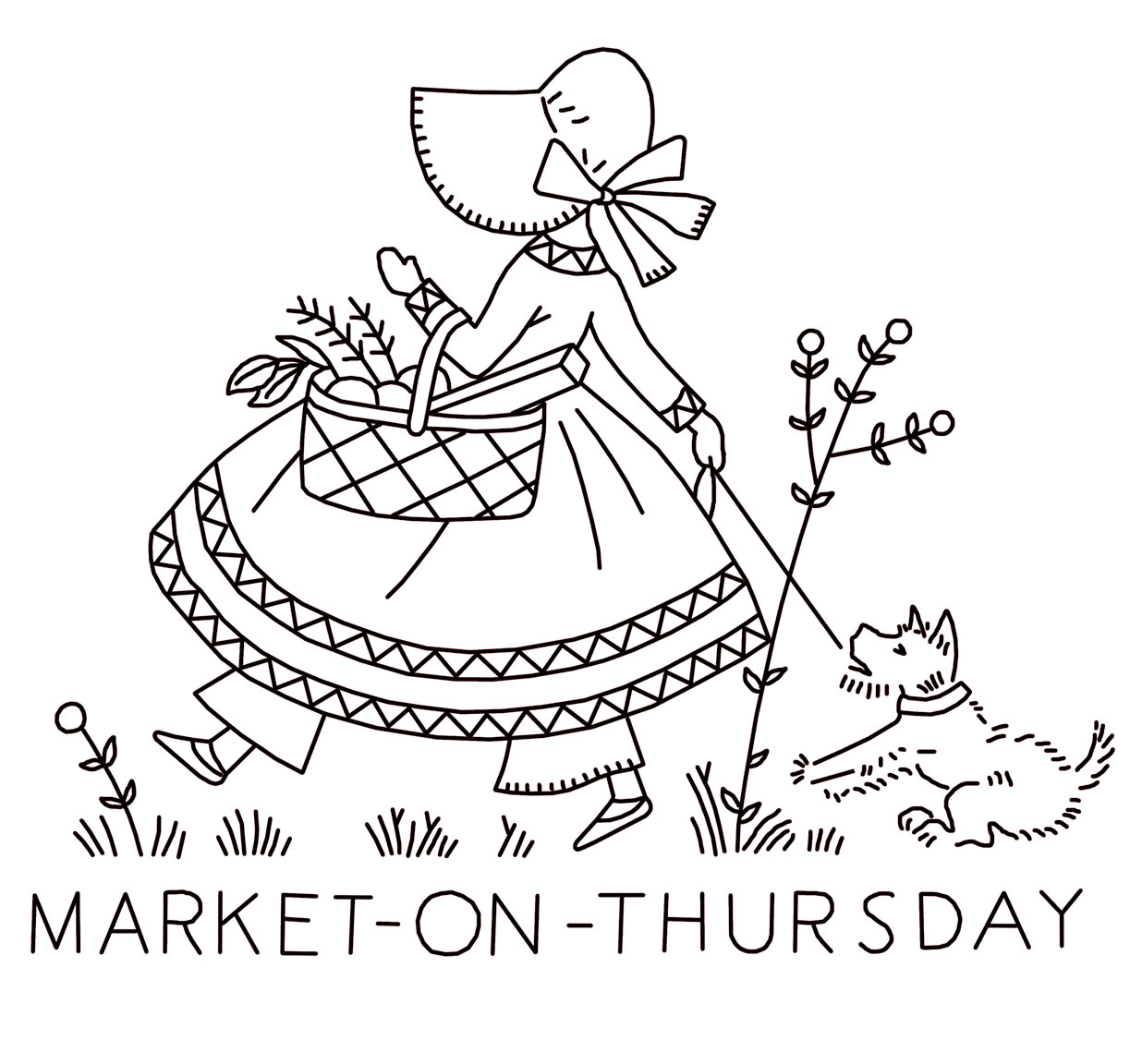
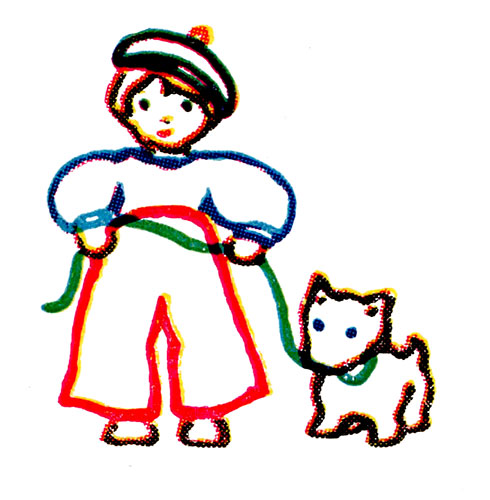
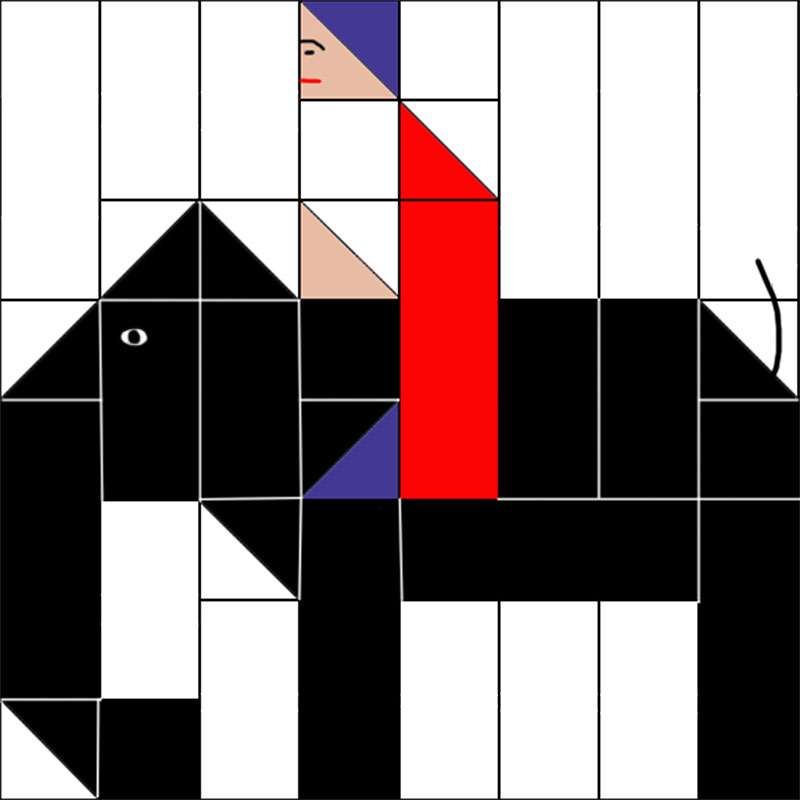
Because I rarely buy new quilt fabric, I only recently discovered that this vintage book has been reproduced as a fabric panel for making a soft book or quilt (Red Rooster Fabrics), but their book doesn’t have this cute patriotic cover.

Tiny Tots Object Book
Whitman Publishing, 1942
Illustrated by “C.E.J.”
Permalink | 5 Comments
by Martha in Uncategorized
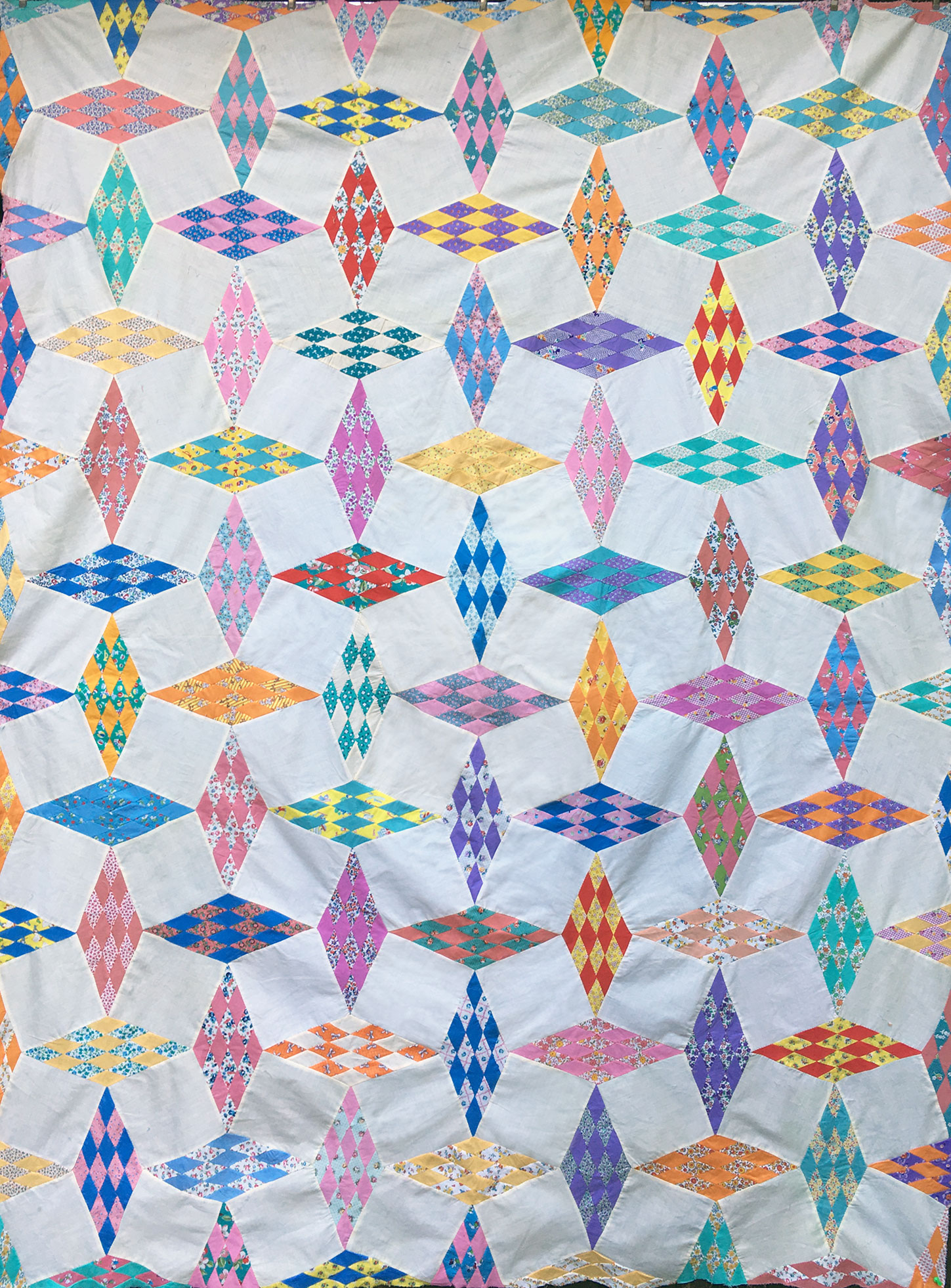
Last week I shipped off a present for Sarah at Makin’ Projiks. She is going through a difficult pregnancy and is on prescribed bed rest, so I suggested she might enjoy hand stitching a quilt for the new baby while she is pretty much trapped on the couch, and she agreed — Yea! Sarah loves all things vintage, so this little Baby Aster kit contains all vintage fabrics. I made a couple of blocks as samples and cut all of the other pieces — the blades, the yellow sashing and centers, and the white blocks and cornerstones. I hope she likes it, and that it will distract her from the monotony of her confinement.

Permalink | 12 Comments
by Martha in Work in Progress
Steffi at Steffi’s Candy Quilts just mentioned on her blog that she has discovered a better way of sewing hexagons which she is going to reveal in her next post. I thought I would show a little bit of my process so we could compare. We both use a running stitch method (as opposed to English paper piecing), but I am interested to see what order she uses.
My process is pretty basic. I usually draw my patterns on grid paper first. A hexagonal grid paper pdf generator is available here from Incompetech– it’s wonderful and can be customized to just about any size (they also have all sorts of other grid generators). I design my pattern and once I am happy with it, I draw a new one where I outline and separate blocks (below is the pattern for the GFG doll quilt). I try to make most blocks the same, but I need to include each variation (sides, top, alternate rows, etc.). To the left I have drawn the most common block and outlined the way I put it together (in horizontal strips). I usually like to stitch the path hexes at the same time I’m sewing the flowers (if I have decided on a setting, which is not always the case).

I noticed that Steffi and I also press differently — her method is more complex (a technique I usually reserve for 6 or more intersections) and very good for removing bulk. Because vintage fabrics are a bit thinner than contemporary fabrics, this has not seemed to be a problem for me, but I’m going to try her method anyway.

Last, I want to show you the darling “sewing companion” that Steffi made for me. It holds a pretty scissors that she purchased in the Netherlands, and it’s going to be so nice to carry in my purse instead of the plastic baggies I have been using for years.


Permalink | 7 Comments
by Martha in Work in Progress
Here’s a project I started a few days ago. This little quilt was inspired by an unbelievably tiny GFG doll quilt made by Steffi at Steffi’s Candy Quilts. I couldn’t imagine making a quilt that small, but I really wanted to try it — my hexagons are about 1/2″ wide.
The quilt is 21″ long — it will be a rectangle with five or six vertical rows. Steffi and I use the same sewing technique, which is a simple running stitch. Even though there are lots of little pieces, it works up quickly since there are only five tiny stitches on each side of the hexagons.
I have a scrappy Grandmother’s Flower Garden bed quilt in process that looks just like this, as well as several other Flower Garden quilts. I just love working with hexagons.


Permalink | 13 Comments
by Martha in Embroidery, Vintage Finds
A couple of months ago I purchased on ebay a catalog of perforated patterns from the M. J. Cunning Co. of Cincinnati, Ohio. Included in the sale were 2 groups of actual perforated patterns — the holes are so tiny that I imagine the pouncing powder must have been very fine. Although there is no date on the catalog, I found an ad in a 1906 Home Needlework Magazine which states the company was established in 1880. Since the price on the advertisement (15¢) is the same as my catalog, I assume the catalog was published in the late 1800s to early 1900s. I looks a lot like the J. F. Ingalls pattern catalog.

The catalog is large at 10″ x 15″ and, although the 76 pages have become very dark with age, it is in amazingly good condition. The printing is not perfect and the designs are packed onto the pages — but this is a catalog, of course, and not meant to be a source for copying patterns. Because the pages are large and the designs are small, I am scanning half pages at a higher resolution than normal, and storing them in my Flickr set rather than on my blog.

It is a slow process to lighten the pages without losing detail on the patterns, but I am gradually working my way through the book. It’s something I like to do in bed late at night which my husband thinks is crazy. It can be tedious, but it’s also very satisfying. I hope my embroiderer readers will enjoy them — I think they are a treasure.


Permalink | 6 Comments
by Martha in Work in Progress
My daughter, Emily, and her boyfriend, Aaron, are engaged to be married, which is not exactly a surprise since they have been together since high school. Aaron is just like a member of our family already, and we are so happy to make it official. Although the wedding is not until next summer, Emily and I are engrossed in preparations.
Emily has always loved Depression glass, so we decided to use mainly Depression green (and some pink) as the wedding colors. We started collecting glassware (especially vases and pitchers, but also plates, candy dishes and candlesticks) for the tables, and we are having lots of fun visiting antique stores. Emily would have loved to put pink peonies in her cute vases, but unfortunately they will not be in season and are also pretty expensive. She has decided to use ranunculus instead, which I think is a nice alternative (smaller, but with a similar look).
I am in the process of embroidering 100+ napkins with their initials. At first I was going to stitch the solid areas in satin stitch, but after completing one napkin, I changed my mind and used a crayon. It’s not quite as nice, but the satin stitch was way too time-consuming. I have to make one about every third day from now until the wedding.

Another project I am planning is table toppers (circles or rectangles, depending upon the table shape). These are going to be simple, and we are thinking of this nursery dot fabric from Joann’s. If I use a 50% coupon, I can buy a whole bolt for $2.50/yard. I am also going to make lots of scalloped pennants out of the same fabric, and I’m thinking about bows for the chair backs. I know those can use a lot of fabric, so I’m going to have to make a few samples to see if it’s feasible.

Permalink | 14 Comments
by Martha in Children's Books
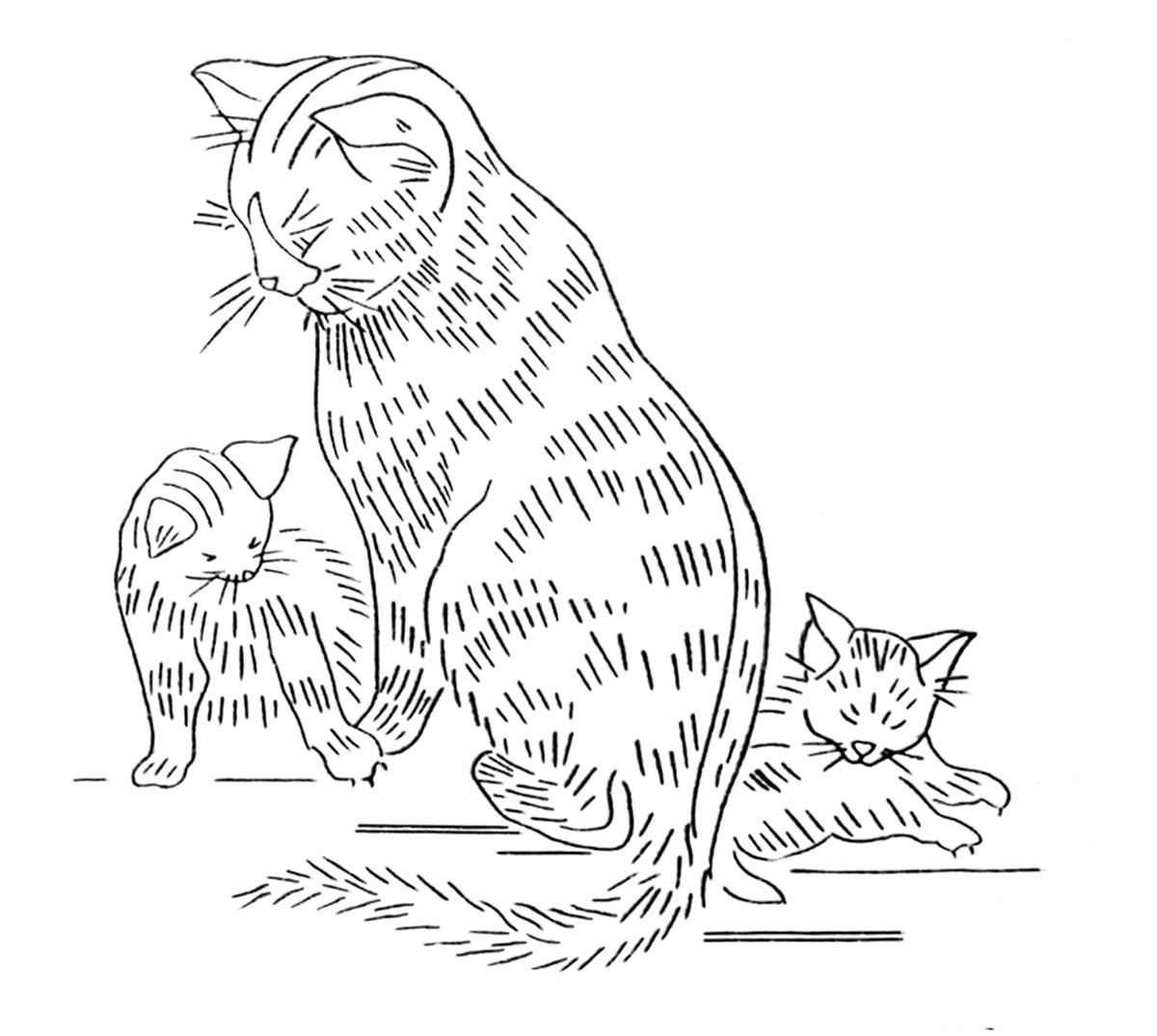
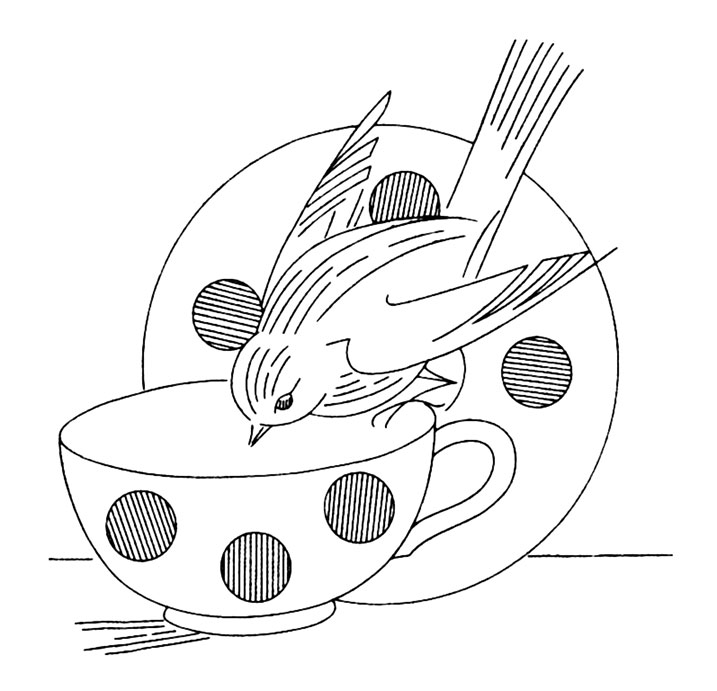
Big Big Paint Book
Whitman Publishing, 1948
Eileen Fox Vaughan, Illustrator


Permalink | 3 Comments
by Martha in Children's Books
I’m not sure, but it seems to me that many children today cannot recite nursery rhymes. This is certainly true at the elementary school where I work, but since more than half of our students are Asian, their parents may not be familiar with the whole Mother Goose thing. Maybe the rhymes are thought to be too old-fashioned and children aren’t interested anymore, although I still think a young child would love them. Anyway, I hope I am wrong about this, because I think they are wonderful.
Here are a few from this group that were new to me.
The Five Toes
“Let us go to the woods,” says this pig:
“What to do there?” says that pig;
“To look for mother,” says this pig;
“What to do with her?” says that pig;
“To kiss her, to kiss her, says this pig.
A Dog and A Cat
A dog and a cat went out together,
To see some friends just out of the town;
Said the cat to the dog,
“What d’ye think of the weather?”
“I think, ma’am, the rain will come down –
But don’t be alarmed, for I’ve an umbrella
That will shelter us both,” said this amiable fellow.
An Apple Pie
An apple pie, when it looks nice,
Would make one long to have a slice;
And if the taste should prove so, too,
I fear one slice would hardly do.
So to prevent my asking twice,
Pray, mamma, cut a good large slice.
Permalink | 5 Comments
by Martha in Vintage Fabric
One of my most favorite things in the whole world is a bunch of vintage quilt pieces. I also like old tops, blocks and scraps, but cut out quilt pieces that were never put together are the best ever. So….I was pretty happy when I came home recently and found a surprise package from my friend, Ann at Nifty Needle. Ann is an accomplished tatter, quilter, seamstress, and also (as it turns out) a pretty good thrift shopper of rare vintage textiles.
These fan blades are from the 1930’s and this is just about half of them — many of these prints have one or two duplicates. At first I was going to use them in my Endless Chain quilt, but I already have lots of pieces cut, and these blades were just a tiny bit too small for the EC template. I have so many Grandmother’s Fan and Dresden Plate quilts in progress that I wanted to use these pieces in something different, so I’ve decided to use them in two different quilts — Autumn Leaves (which I will cut out of the larger end of the blade) and Postage Stamp (the small end). It’s important to me that I use every little bit of these cute pieces.
I haven’t worked on the Autumn Leaves quilt in a long time, so I am going to make that my next project to carry around in my purse. All the leaves have to be turned under with basting thread, so I just keep a little bag of them in my purse and baste a few whenever I can. You would be amazed at how much you can accomplish just by grabbing a spare minute here and there.
Thank you so much, Ann — I love them.

Permalink | 8 Comments
by Martha in Work in Progress
Although this block doesn’t have nearly as many pieces as some of the other indigo blocks, it was probably the most difficult to stitch. I hand pieced most of the block, but the small domed muslin pieces around the center section were hand pieced (on the sides) and appliqued (around the top). It just seemed like an easier way of dealing with the sharp curves.
I reversed the colors in the center circle because I felt there was too much white in the block. I actually think this pattern would look better in three colors so you could see the curve of the small muslin pieces. Sometimes drawings of quilt blocks can be deceptive since the lines between same-colored pieces will not show up in the finished piece..
I don’t think I am going to use this block in the indigo quilt — for the reason stated above and also because all the other blocks are pieced with a circular background piece, and I am thinking I want to keep that element consistent. There are some other similar blocks in the Ladies Art catalog that could be drafted with a circular background.


Permalink | 9 Comments